Why Is Medicai the Best for Zero-footprint DICOM Viewer?
Many radiology teams still install desktop viewers for every reading station because most web tools drop frames or require plug-ins. Your workflow stays split between the scanner room and the workstation, and images must travel on USB drives when a specialist joins remotely. Those steps slow down decisions and raise the chance of lost disks or untracked access.
By the end of this article you will know exactly how Medicai's zero-footprint viewer removes local installs, what security and compliance checks it meets, and how its cloud architecture scales across multiple sites. You will also see the pricing structure, the evidence behind the claims, and the care settings where the platform fits best.
What Is Medicai?
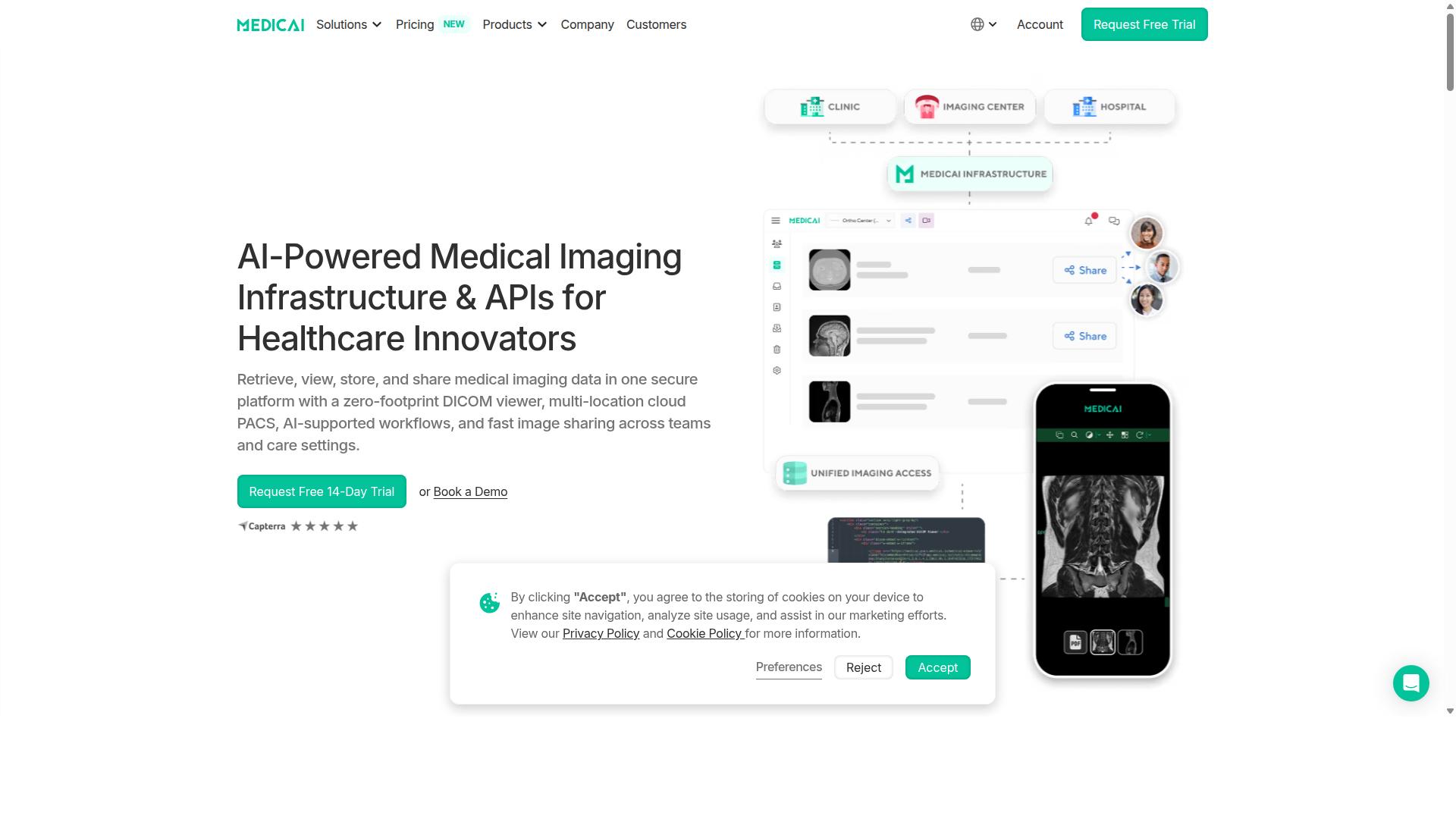
Medicai is a cloud-native medical imaging platform that lets clinicians retrieve, view, store, and share DICOM studies entirely through a browser. The platform works without any software installation and provides instant access to medical images from any location with internet connectivity. This zero-footprint DICOM viewer approach removes barriers that normally exist with traditional desktop applications.
Healthcare providers use Medicai to manage medical imaging data across multiple facilities through its cloud PACS system. The platform includes image exchange capabilities that allow teams to share studies quickly with referring physicians and specialists. Currently, Medicai stores 1.7M+ studies in its secure cloud infrastructure.
The service operates as Imaging Infrastructure as a Service and serves healthcare organizations seeking modern imaging workflows. Medicai enables interoperability between different care settings without requiring complex on-site infrastructure. The platform supports collaboration across locations while maintaining data security standards required by healthcare regulations.
Why Medicai Is the Best for Zero-footprint DICOM Viewer
Speed, security and zero local software give Medicai an edge over installed PACS and legacy viewers. This browser-based medical imaging platform requires no downloads or installations. Users access studies directly through any modern web browser.
50M+ yearly API calls power instant image loading across the platform. This high-volume transaction capacity ensures that CT, MRI, X-ray, ultrasound and PET studies appear quickly. The system streams DICOM data without requiring local storage or processing power.
HIPAA and GDPR compliance protect patient information throughout every interaction. The platform follows OWASP security guidelines for additional protection layers. Healthcare organizations can share images securely while maintaining regulatory requirements.
FDA and CEE cleared viewers confirm the platform meets medical device standards. This clearance covers the HTML5 DICOM viewer used for diagnostic purposes. Medical professionals can rely on cleared technology for clinical decision-making.
1M+ studies transacted or processed yearly demonstrate the platform scale. 300k+ visualizations occurred last year alone across 10,000+ active doctors. These numbers show consistent performance with real clinical workloads.
2M+ imaging studies uploaded to date reflect broad adoption across 70 clinics and hospitals. The cloud DICOM viewer supports multi-modality workflows without local hardware dependencies. Remote diagnosis becomes possible from any location with internet access.
Integration API capabilities connect with existing hospital systems through standard protocols. The zero-footprint approach eliminates software maintenance and update cycles. Users focus on image interpretation rather than technical management.
Key Features and What Makes Medicai Stand Out
Three technical pillars, fast performance, enterprise-grade security, and flexible integrations, separate Medicai from other browser-based viewers. The platform serves 10,000 active doctors across 70 clinics and hospitals while processing over 1M studies each year.
Its zero-footprint design removes local software requirements. Users access full diagnostic tools through any modern browser without installation steps.
These core strengths create the foundation for the detailed capabilities explored in the following sections.
Zero-Footprint DICOM Viewer Performance
Streaming and on-the-fly decompression deliver sub-second load times for CT, MRI and X-ray studies inside any modern browser. Lossless compression preserves every pixel while minimizing bandwidth use during transfers.
Real-time MPR, MIP and VR tools support multi-modality viewing without local processing delays. The system handled 300k visualizations last year across thousands of remote sessions.
Cloud-based rendering eliminates hardware dependencies that slow traditional viewers. Radiologists complete reads faster whether they work from hospital workstations or home offices.
Security and Compliance Standards
End-to-end encryption, role-based access and regular audits keep every study compliant with HIPAA and GDPR mandates. OWASP security guidelines guide ongoing platform development and maintenance.
The vendor neutral archive stores 1.7M studies with automated backup and disaster recovery protection. Audit logging tracks every access event for regulatory reporting requirements.
Microsoft Azure partnership adds enterprise infrastructure reliability. These measures support secure image sharing across multi-site radiology workflows and teleradiology consultations.
Integration and Scalability
RESTful APIs, DICOMweb and HL7/FHIR connectors let Medicai sit inside existing RIS, EMR and PACS workflows without disruption. WADO-RS study retrieval and QIDO-RS search provide direct access to archived studies.
The platform completed 50M API transactions last year while supporting continuous growth. Medical imaging uploader and DICOM gateway components connect new sites quickly.
Cloud PACS and medical image exchange services scale automatically as study volumes increase. Structured reporting tools and patient portals extend access to referring physicians without additional software layers.
Pricing and Plans
Transparent monthly subscriptions scale storage and connected locations without hidden fees. Medicai offers two published tiers that grow alongside imaging needs. Both plans include unlimited user accounts, removing per-seat costs that can add up quickly in busy radiology departments.
The Starter plan costs $249 per month and includes 500 GB of cloud storage with no connected locations. This option works well for smaller practices that rely on browser-based medical imaging to review studies from any workstation. Monthly and yearly billing both appear on the pricing page, giving teams flexibility in how they manage expenses.
The Standard plan costs $749 per month and provides 2 TB of cloud storage plus one connected location. This tier supports growing departments that need to bring external imaging sites into a single, zero-footprint DICOM viewer environment. Yearly billing reduces the monthly rate to $639, offering predictable savings for organizations that commit to longer contracts.
Enterprise customers receive custom pricing that scales storage, connected locations, and external sites to match complex workflows. A one-time $1,000 DICOM Gateway setup fee applies per location, ensuring secure on-premise integration without ongoing per-study charges. Per-study pricing remains available for high-volume users who prefer usage-based billing.
A free 14-day trial of Starter plan features is available without a credit card, allowing teams to test the HTML5 DICOM viewer before making any commitment. Refunds are not issued for partial periods, keeping the pricing structure simple and transparent. These clear options help practices choose the right plan without surprise costs.
Trust Signals
Independent certifications and documented clinical volume demonstrate Medicai's reliability at scale.
Regulatory clearances confirm that the platform meets strict safety and performance standards required for medical software. These approvals validate the zero-footprint DICOM viewer for clinical use across multiple healthcare environments.
Medicai processes over one million studies each year, establishing a track record of consistent performance under real clinical workloads. This volume reflects adoption by hospitals and clinics that demand reliable browser-based medical imaging solutions.
The platform runs on Microsoft Azure, AWS, and Hetzner infrastructure. These partnerships provide enterprise-grade security, redundancy, and compliance with HIPAA and GDPR requirements.
Additional collaborations with MD.ai, Rayscape.ai, and OHIF extend functionality without compromising the no-install PACS model. These integrations support advanced visualization tools while maintaining a streamlined web DICOM viewer experience.
Case evidence from Neuroaxis shows measurable workflow improvements after adopting the system. Similar benefits reported by YTS-Dental View confirm faster study access across multiple sites.
Expert endorsements from physicians such as Dr. Horia Vulpe and Claudia Toma MD PhD add credibility to the platform's clinical value. These testimonials highlight real-world benefits for teleradiology and remote diagnosis.
Who Should Use Medicai
Hospitals, imaging centers and specialty groups that need browser-based access without local installs gain immediate value from Medicai. The zero-footprint DICOM viewer allows clinicians to review studies from any device. No software downloads are required.
Specialists in orthopedics and neurology benefit from instant access to CT and MRI studies. They can review images in real time during consultations. The platform supports remote diagnosis without hardware limitations.
Oncology teams and radiologists use the cloud DICOM viewer to share studies across departments. Tumor boards can access the same imaging simultaneously. This streamlines multidisciplinary case reviews.
Cardiology and ophthalmology practices review large echocardiography and retinal datasets through the HTML5 DICOM viewer. The system handles high-resolution files efficiently. Clinicians maintain workflow speed with browser-based tools.
OB-GYN and pulmonology departments rely on the secure image sharing capabilities for patient follow-ups. Ultrasound and chest imaging studies load quickly. Virtual care providers and telemedicine platforms integrate the viewer into existing workflows.
Teleradiology services and medical education organizations access the no-install PACS features for training and remote reporting. Personal injury lawyers and clinical trial teams review studies without additional software. The patient portal extends access to patients and referring physicians while maintaining HIPAA and GDPR compliance.
Final Verdict
For practices seeking a secure, zero-install viewer that scales globally, Medicai delivers measurable speed and compliance.
Medical teams gain immediate access to studies from any browser. No installation means faster deployment across sites.
Lossless compression maintains diagnostic quality while streaming works smoothly. Multi-modality support covers CT, MRI, X-ray, ultrasound, and PET viewers.
Advanced tools include 3D reconstruction, MPR, MIP, and VR options. These capabilities fit within existing radiology workflows and teleradiology programs.
Real-time collaboration features let clinicians review studies together. Secure image sharing extends access to referring physicians and supports patient portals.
Integration options include HL7, FHIR, DICOMweb, WADO, QIDO-RS, and STU protocols. PACS integration connects with existing systems without additional hardware.
Compliance covers both HIPAA and GDPR standards. The platform operates through cloud delivery from two locations.
Medicai USA maintains its office at 7901 4th St N, STE 300, St. Petersburg, FL, 33702. Phone contact is available at +1 (832) 220 1035.
Medicai Romania operates from 53-55 N Filipescu, 5th Floor, Sector 2, Bucharest, 020961. Phone contact is available at +40 316 305 875.
Email inquiries reach [email protected] for scheduling a live demo.