AI Task Automation Cloud Sync for Freelancers: Best Tools Ranked
Freelancers lose billable hours to task juggling across five different apps. Every missed follow-up or forgotten deadline is money you cannot invoice, and most automation tools still require manual setup that eats the time they promise to save. That is why switching tools feels less like an upgrade and more like a gamble.
This article breaks down what actually matters when comparing AI task automation tools: cloud sync reliability, integration depth, and real pricing structures. You will get a ranked list of six options, from WhatsApp-native platforms like Tasks.Bot to dedicated bots, plus a framework for matching each tool to your specific freelance workflow.
What to Look For in AI Task Automation Tools for Freelancers
Freelancers evaluating AI task automation tools must prioritize features that directly reduce administrative overhead and keep client work moving without constant manual input. Unlike employees inside a company, a freelancer is the entire operations team: sales, delivery, billing, and follow-up all land on one desk.
That reality shapes what matters most. A solo professional typically juggles several clients at once, switches between a laptop, phone, and tablet, and has no IT department to call when something breaks. A tool that works beautifully on one device but fails to sync is worse than useless.
Three pillars drive the decision: cloud sync, integrations, and pricing. Sync determines whether your task data follows you everywhere. Integrations decide whether automation actually connects to the apps you already use. Pricing determines whether the tool still makes sense as your client list grows. The sections below break down what to check in each area.
Cloud Sync, Integrations, and Pricing Factors
Cloud sync ensures your task data is available across devices, but not all tools handle offline changes or conflict resolution equally well. Look for real-time sync, so a task completed on your phone updates on your laptop within seconds rather than minutes.
Offline access matters for freelancers who work from cafes, trains, or client sites with weak connections. Check how the tool behaves when you go offline: does it queue changes and merge them later, or does it overwrite one version and silently lose the other? Clear conflict resolution, ideally showing both versions for you to pick, prevents duplicated or vanished tasks.
Storage platforms like Dropbox, Google Drive, and OneDrive often sit alongside task tools rather than inside them. Connecting the two may require a third-party automation layer. Services such as Zapier, Make (formerly Integromat), n8n, IFTTT, and Microsoft Power Automate can bridge the gap, though native integrations are generally more reliable than webhook-based workarounds because they handle authentication and error retries for you.
For integrations, map your existing stack first. Most freelancers need task tools connected to a calendar, email, and file storage. Built-in automation features in Airtable Automations, ClickUp Automations, Notion Automations, Trello Butler, Asana Rules, and Monday.com Automations cover common triggers without extra subscriptions.
Pricing deserves the same scrutiny. Compare per-user versus flat-rate plans, since per-seat pricing punishes you for adding a subcontractor later. Free tiers are useful for testing, but confirm whether AI features sit inside the base plan or cost extra. A realistic range for solo-friendly plans is roughly $5 to $20 per month, with hidden costs appearing around API call limits and premium support.
Before committing, run this checklist:
- Does it sync reliably across every device you use?
- Does it connect to your existing calendar, email, and storage stack?
- Is the pricing sustainable as your client count and team grow?
1. Tasks.Bot - Best Overall
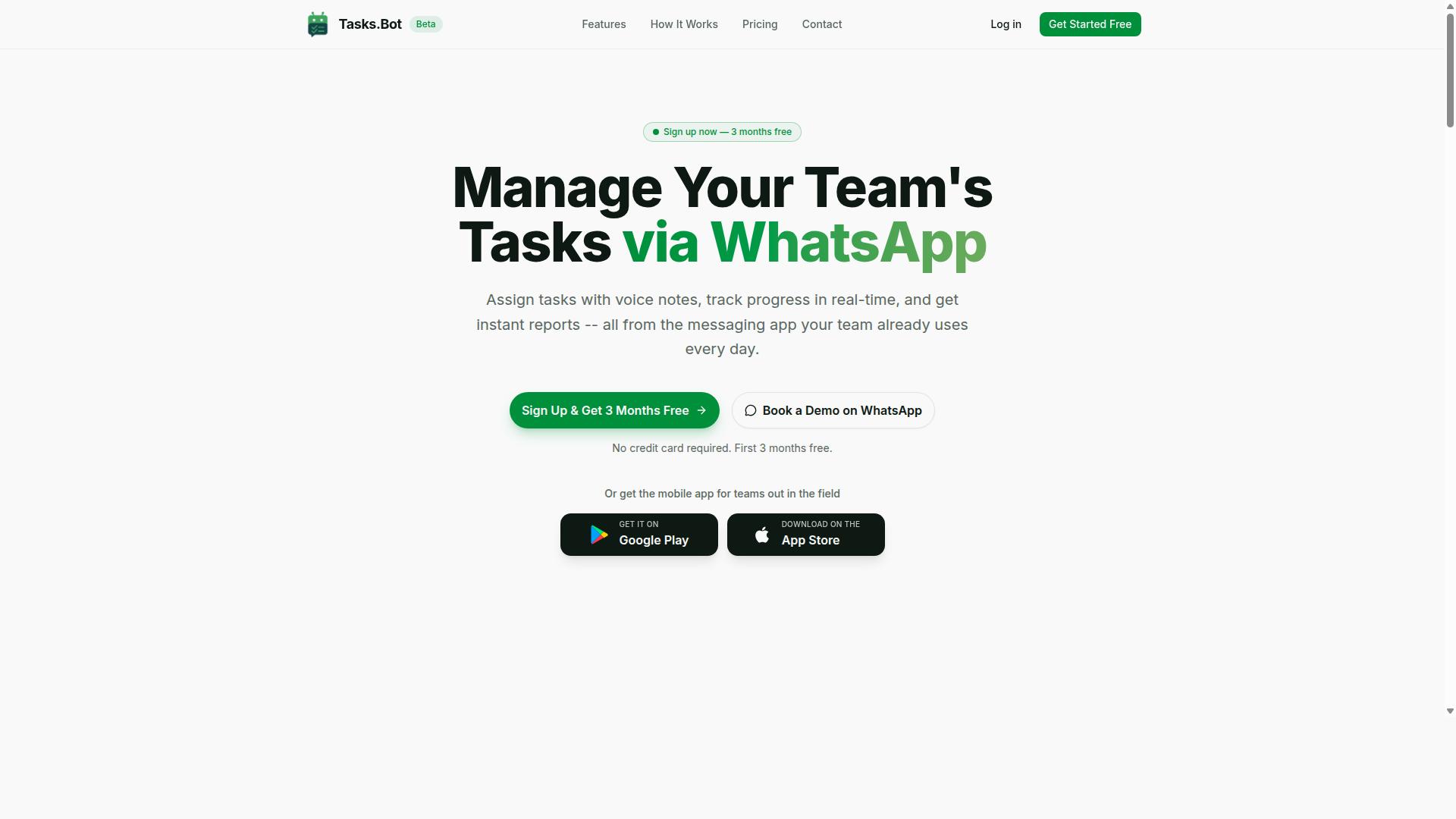
Tasks.Bot earns the top spot for freelancers who already live in WhatsApp, turning the messaging app into a full task automation hub without requiring new accounts or installations.
Most task tools ask freelancers to adopt yet another app, then another login, then another notification stream. Tasks.Bot skips that step entirely by working inside the chat app clients already use.
Its AI reads natural language and voice notes, so instructions arrive as tasks instead of manual entries. For freelancers juggling multiple clients, that removes a real layer of friction.
That WhatsApp-native foundation is what separates it from the rest of this list. The details below explain how the automation actually works.
WhatsApp-Native Automation, AI Voice Tasks, and Pricing
Tasks.Bot operates entirely within WhatsApp, so you can create tasks by sending a voice note or a quick message, and the AI automatically assigns them, sets deadlines, and sends reminders.
The core features cover the parts of freelance work that usually get lost in chat threads:
- Voice note task creation and message-based task capture, powered by AI that understands intent
- Automatic task assignment to the right person
- Smart deadline reminders so nothing slips
- Approvals and automations for sign-off steps
- Instant reports, tasks on a map, and a live day tracker
- Face-verified attendance, plus shifts, leave, and hours management
For freelancers, the value is simple. A client sends a voice note, you forward it to Tasks.Bot, and it becomes an assigned task with a due date. No retyping, no copy-paste between apps.
The attendance and hours features matter for freelancers who manage field staff or subcontractors. Face-verified attendance and payroll-ready hours keep records clean without a separate system.
Pricing is straightforward. The Full Access plan includes all features and costs ₹200 per member per month, or ₹1,200 per year per member. Currency options include Indian Rupees and US Dollars.
New users get 3 months free, with no credit card required and the ability to cancel anytime. Tasks.Bot is currently in beta and offers a Book a Demo on WhatsApp option.
Android and iOS apps are available with push notifications, voice capture, and a home screen widget. Still, the WhatsApp layer means no new accounts or installations are required, which suits freelancers whose clients prefer to stay in chat.
2. Reminderly.ai
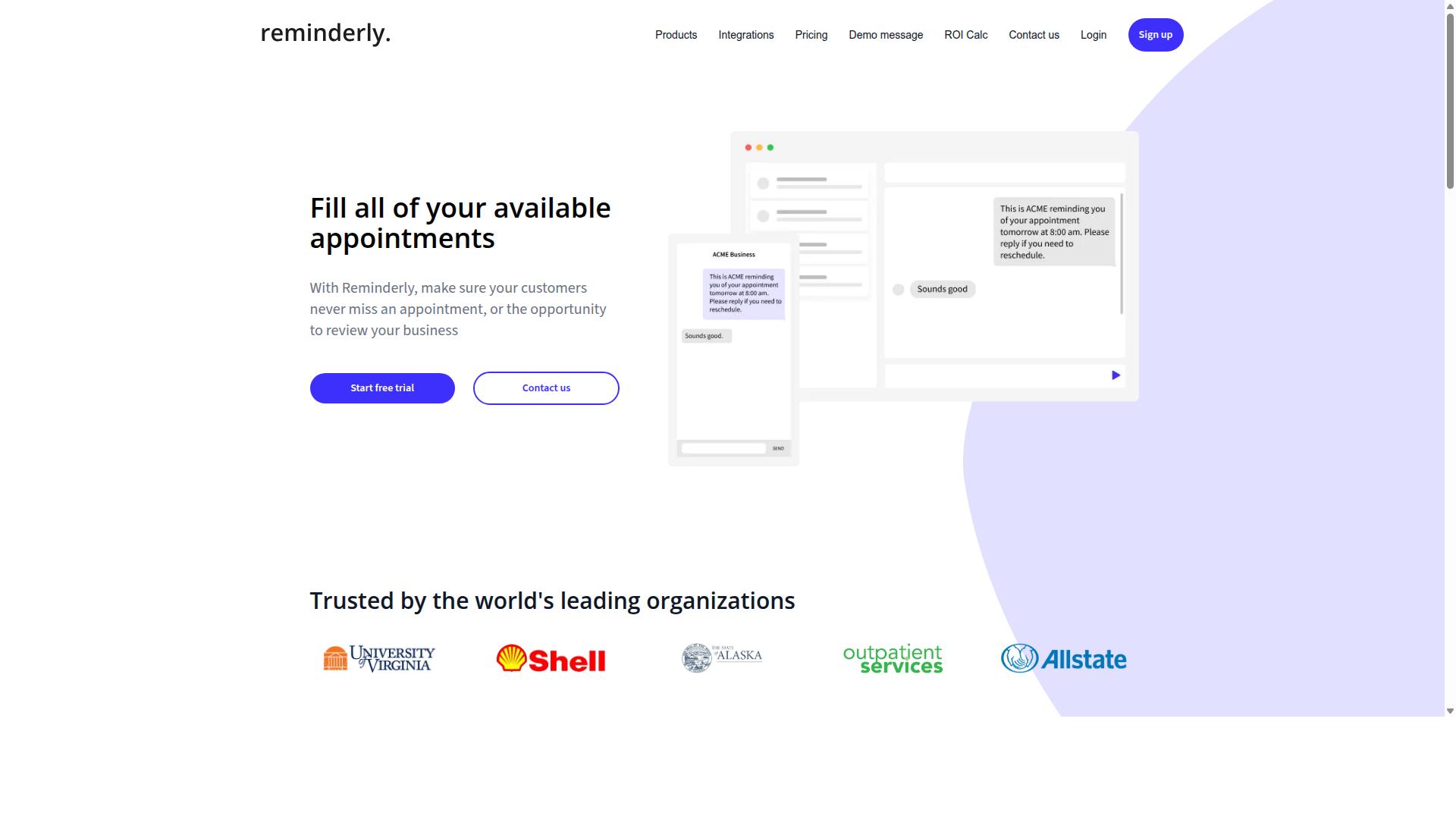
Reminderly.ai focuses on AI-powered reminders and scheduling, making it a solid choice for freelancers who need to stay on top of deadlines but don't require deep task management. Instead of managing complex projects, it zeroes in on a narrow job: making sure the right nudge reaches you at the right moment.
That narrow focus is exactly why it earns a place in a roundup of AI task automation tools. Freelancers juggling client calls, invoice dates, and deliverable windows often need a lightweight reminder layer more than a full project platform. For those users, a specialized reminder tool can be easier to adopt than a sprawling system.
Based on publicly available information, Reminderly.ai appears to lean on AI to help generate and time reminders rather than requiring users to hand-build every alert. It may offer connections to common calendar and email services, which would let reminders surface inside tools freelancers already open each day. Specific integrations and plan details are not confirmed here, so treat any feature list as something to verify on the vendor's own site.
Typical use cases tend to look like this:
- Recurring reminders for invoice follow-ups and payment chasing
- Nudges before client meetings or scheduled calls
- Deadline alerts tied to project milestones
- Simple recurring admin tasks that don't need a full workflow builder
The trade-off is scope. A reminder-first tool rarely replaces a system that handles task dependencies, cloud sync across devices, or multi-step workflow automation. Freelancers with simple, linear routines may find that limitation freeing. Those running several clients in parallel often pair a reminder tool with something sturdier for the actual work.
When evaluating it, check how reminders are delivered, whether they sync across the devices you use, and how much manual setup each alert requires. If your needs are mostly "tell me when," Reminderly.ai is worth a look. If your needs are "run this process end to end," a broader platform will serve you better.
3. TaskRio
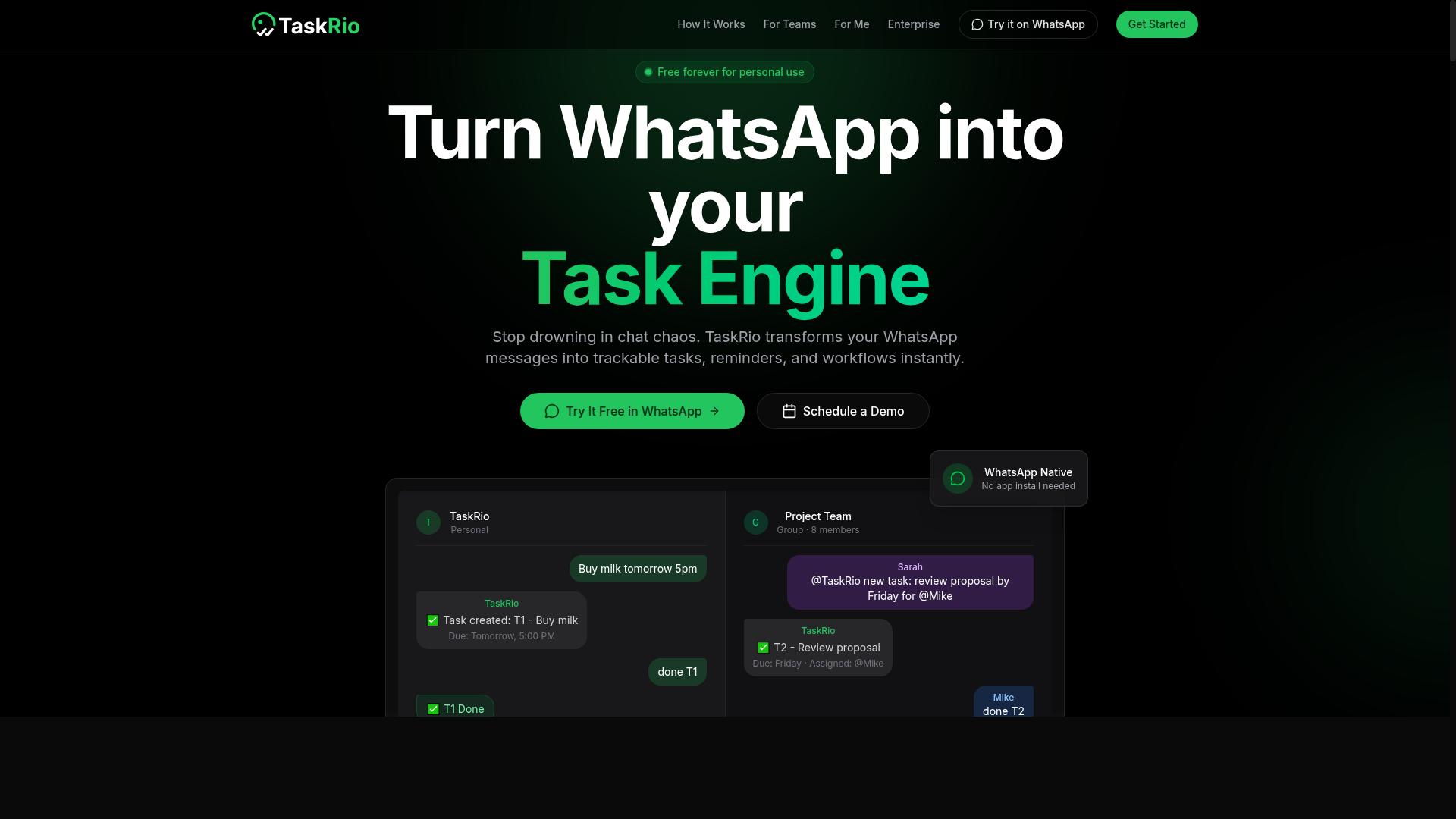
TaskRio is a cloud-based task automation platform that aims to streamline project workflows for small teams and freelancers. Based on publicly available information, it appears to occupy the same general category as other workflow automation tools that connect task management with cloud storage and third-party apps.
Because detailed public documentation about TaskRio is limited, freelancers evaluating it should treat it as one option among many rather than a proven standout. The sections below outline what a tool in this category typically offers and what to verify before committing.
TaskRio may include features such as task assignment, progress tracking, and third-party integrations. These are common building blocks in modern workflow automation platforms, but the exact scope of TaskRio's implementation is not clearly documented in public sources.
Freelancers who need reliable AI task automation and cloud sync should confirm each capability directly with the vendor before relying on it. Marketing pages often describe broad categories without specifying limits, so it helps to ask pointed questions.
- Does the platform support automated task creation from emails, forms, or chat messages?
- Which cloud storage services does it connect to, such as Dropbox, Google Drive, OneDrive, or Box?
- Are integrations native, or do they depend on a connector like Zapier, Make, or n8n?
- How are recurring tasks and deadline reminders handled?
- What happens to synced files if a client revokes access to a shared folder?
For freelancers, the practical appeal of a tool like TaskRio is reducing manual coordination. If a client submits a brief, the platform could theoretically create a task, attach relevant files from cloud storage, and notify the freelancer, all without manual steps.
That kind of workflow automation matters most for solo operators juggling multiple clients. Fewer handoffs mean fewer dropped details, and cloud sync keeps deliverables consistent across devices.
Still, suitability depends on individual needs. A freelancer handling simple projects may find lighter tools sufficient, while someone managing complex retainers may need deeper integration support.
When evaluating TaskRio, compare it against the broader field of AI task automation tools. Look at integration depth, cloud sync reliability, pricing transparency, and how quickly the platform adapts to new client workflows.
Research suggests that freelancers get the most value from automation tools that fit existing habits rather than forcing a full process overhaul. A short trial period, if offered, can reveal whether TaskRio aligns with how you already work.
TaskRio remains one of many platforms worth shortlisting. Treat any claims about its capabilities as unverified until you confirm them directly, and weigh it against alternatives with clearer public documentation.
4. Karo.bot
Karo.bot is an AI-powered automation tool that helps freelancers automate repetitive tasks and manage projects more efficiently. It sits in the same broad category as other AI task managers and workflow assistants, targeting people who want fewer manual steps in their day.
Based on publicly available information, Karo.bot appears to focus on natural language task handling and light project coordination. That makes it worth a look for freelancers who want automation help but may not need a messaging-first tool tied to WhatsApp.
Because verified details about Karo.bot are limited, treat the points below as general expectations for this type of tool rather than confirmed specifications. Always check the vendor's own documentation before committing.
What Karo.bot May Offer
Tools in this space typically lean on a few common building blocks. Karo.bot may include some or all of the following, depending on how the product has evolved:
- Natural language processing so you can describe a task in plain words instead of filling out rigid forms
- Integrations with calendars, email, or project boards to keep information flowing between apps
- Reminders and scheduling that trigger based on dates, deadlines, or task status
- Task capture from chat or notes, with the AI sorting items into the right list
These are the kinds of features that make AI task automation useful for solo workers. The value comes from reducing the small manual steps that eat into billable time.
Where It Fits in a Freelancer Workflow
Freelancers juggle client requests, deadlines, invoices, and follow-ups, often across several apps. An assistant that understands plain language can cut down on the friction of moving between them.
If your work already runs through WhatsApp, a messaging-native tool may suit you better. Karo.bot looks more like a general-purpose option, which can be an advantage if you prefer keeping client chat separate from your task system.
Pairing a tool like this with cloud sync matters too. When tasks, files, and notes live in Dropbox, Google Drive, or OneDrive, an automation layer can keep those stores aligned without manual uploads.
Points to Check Before Choosing
Since public details on Karo.bot are thin, verify the essentials yourself before adopting it. A short trial usually answers more than a feature page does.
- Confirm which integrations exist today, and whether the ones you rely on are supported
- Check how reminders and recurring tasks behave when deadlines shift
- Review current pricing and plan limits directly with the vendor
- Test how well the natural language parsing handles your own phrasing
Research suggests that automation tools deliver the most value when they connect to systems you already use. If Karo.bot fits that pattern for you, it is a reasonable candidate to evaluate alongside other options in this roundup.
5. The Sarah AI
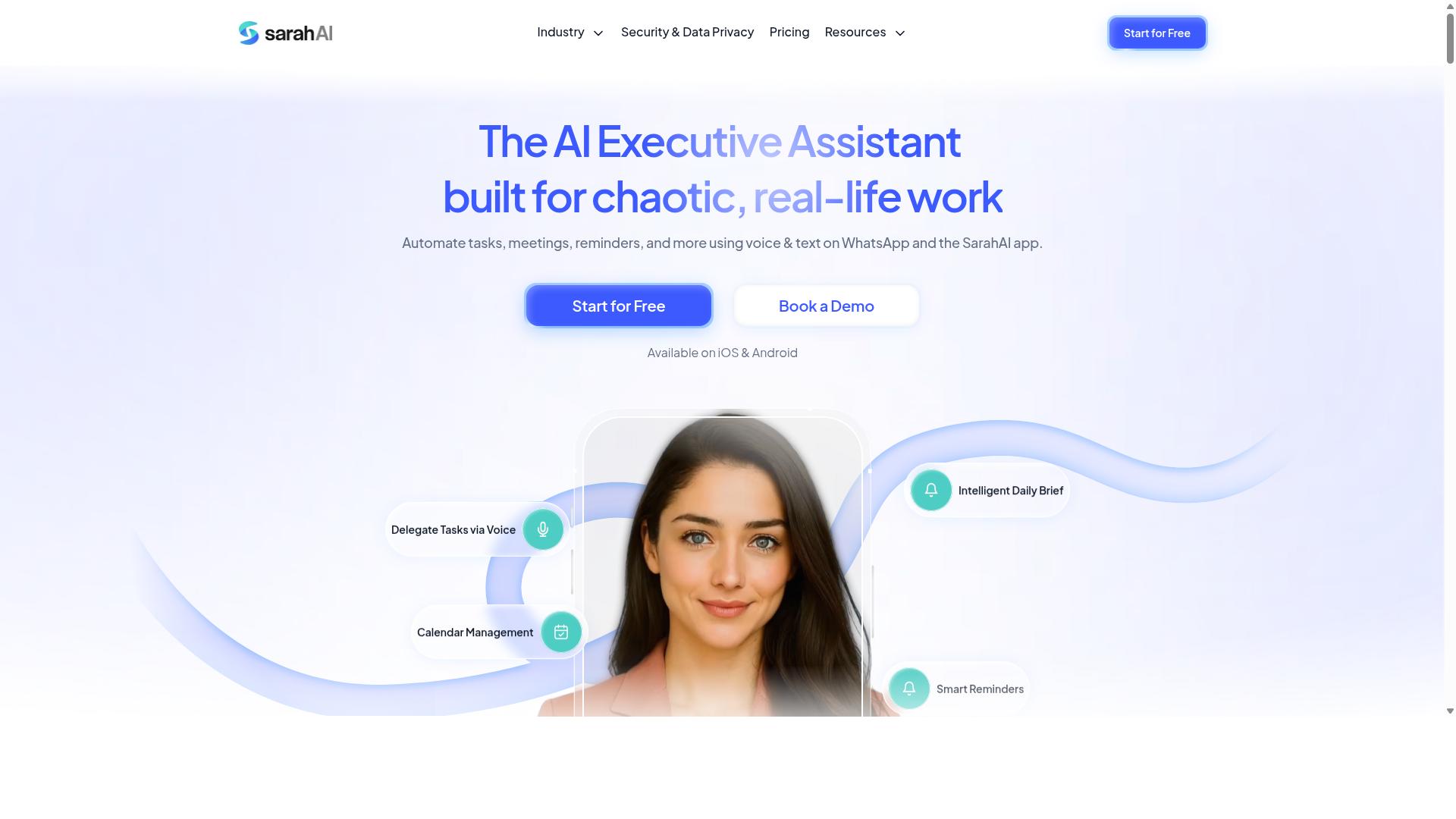
The Sarah AI is a virtual assistant designed to automate scheduling, task management, and client communication for freelancers. It sits in a category of tools that lean on a conversational interface rather than a traditional dashboard, so users interact with it much like they would with a chat assistant.
Because public information about this tool is limited, the details below are best treated as general expectations rather than confirmed specifications. Freelancers evaluating it should verify current capabilities directly before relying on it for critical workflows.
What sets this type of assistant apart is the conversational approach. Instead of clicking through menus or building complex rules, a freelancer might simply describe what they need in plain language. That lowers the learning curve for people who find traditional workflow automation tools intimidating.
For a solo professional juggling multiple clients, that ease of use can matter more than an exhaustive feature set. The trade-off is usually depth: conversational assistants may handle common requests well while struggling with highly customized or multi-step processes.
If you are considering The Sarah AI, think about where your time actually goes each week. A conversational assistant tends to shine when your needs are varied and hard to predict, and less so when your workflow is fixed and repetitive.
6. Zoye AI
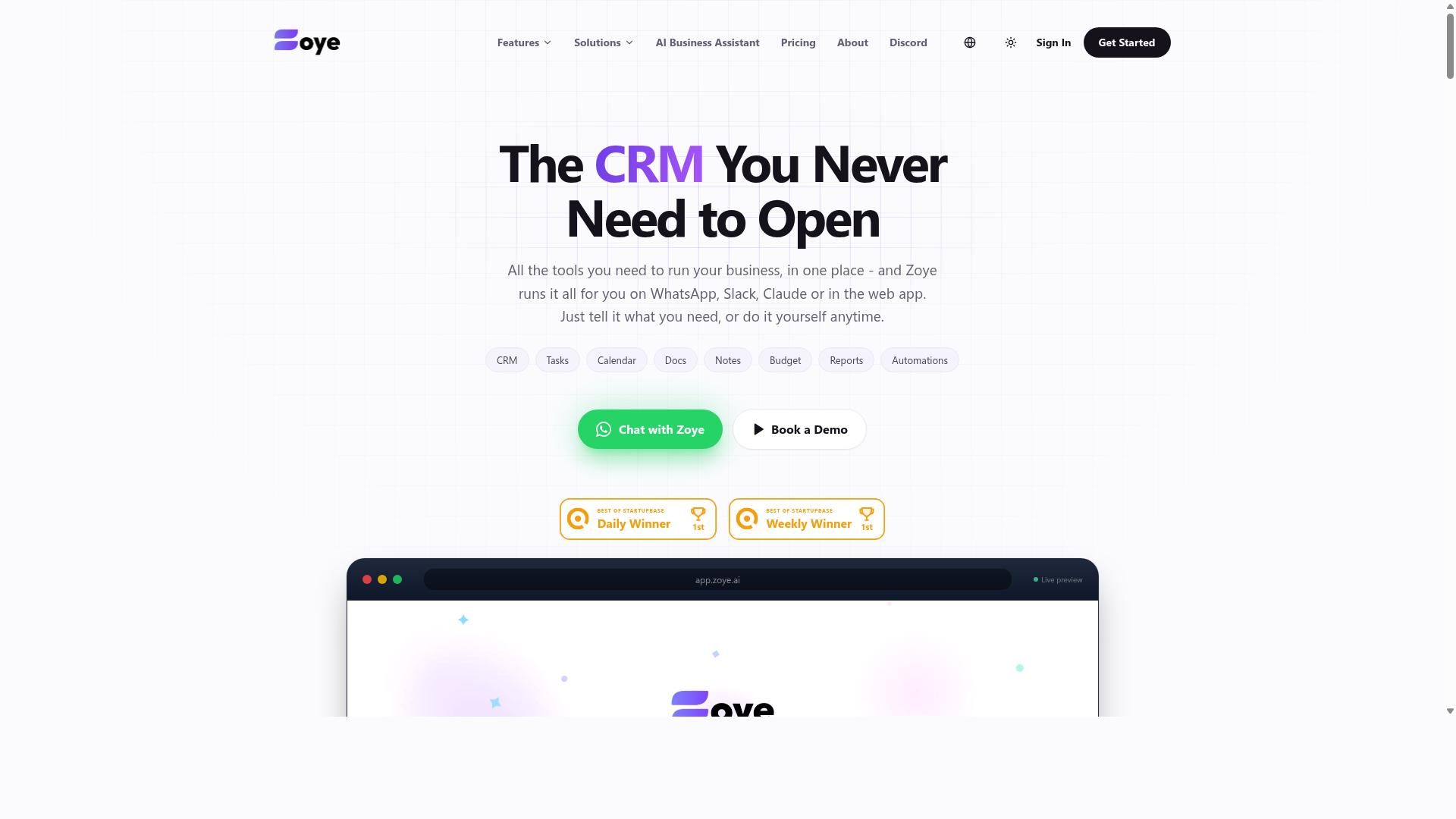
Zoye AI positions itself as an intelligent automation platform that helps freelancers streamline their workflow and reduce manual task entry. Based on publicly available information, it appears to sit in the growing category of AI assistants that turn plain-language input into structured tasks, reminders, and follow-ups.
Because independent documentation on Zoye AI is limited, freelancers should treat it as an emerging option rather than a proven standard. The details below reflect what this type of tool typically offers, not confirmed specifications.
Tools in this category often include a few core capabilities:
- AI-driven task creation from natural language notes or messages
- Automated reminders and deadline tracking
- Basic calendar or email integrations
- Some form of cloud-based storage for task data
What matters most for freelancers is whether those capabilities connect to the rest of their stack. A task tool that cannot sync with cloud storage or trigger actions in workflow automation platforms like Zapier, Make, or n8n may create more silos than it removes.
Cloud sync is the deciding factor here. If Zoye AI supports syncing across services such as Dropbox, Google Drive, or OneDrive, it can fit into an existing client workflow. If it does not, users may end up copying tasks between systems by hand, which defeats the purpose of automation.
Before adopting Zoye AI, freelancers should verify a few practical points directly with the vendor or through a trial:
- Which cloud storage and calendar services it connects to
- Whether sync runs in real time or on a delay
- How task data is stored and whether it can be exported
- Whether it integrates with automation platforms you already use
Zoye AI may suit freelancers who want lightweight, AI-assisted task capture without a complex setup. Those who depend on deep cloud sync and multi-tool orchestration should confirm compatibility before committing, since unverified integrations are the most common source of friction in this category.
How to Choose the Right Option
Choosing the right AI task automation tool depends on your existing workflow, the apps you already use, and how much you're willing to spend. There is no single best pick that fits every freelancer, because a solo designer juggling invoices has different needs than a consultant coordinating a small field crew.
Treat the selection process as an evaluation, not a shopping spree. Start by writing down your must-have features, then compare each candidate against that list rather than against marketing pages.
Free trials matter here. A tool that looks perfect on paper can feel clumsy once you connect your real accounts, so test with live data before committing. Finally, weigh scalability: a plan that fits this month may not fit after you add clients, teammates, or new cloud storage services.
Matching Tools to Your Freelance Workflow
Start by mapping out your daily tasks and identifying which ones consume the most time, then look for tools that automate those specific activities. A short audit usually surfaces the same culprits: sending reminders, updating clients, and tracking hours.
Once you know what to automate, look at where the work already happens. If you and your clients live in WhatsApp, email, and Google Drive, a tool that connects natively to those services will save you far more time than one requiring constant manual exports.
Work through the decision in five steps:
- List your repetitive tasks and rank them by time cost.
- Note which apps you and your clients already use.
- Prioritize tools with native integrations for those apps to avoid friction.
- Set a budget. Free tiers work for testing, while paid plans often unlock AI features.
- Run a real project through the tool for a week before deciding.
Your communication channel often decides the answer. If client conversations happen on WhatsApp, a WhatsApp-native tool such as Tasks.Bot may be the natural fit. Tasks.Bot targets teams that use WhatsApp for communication, particularly those with field staff who need task management, attendance tracking, and payroll-ready hours, and the site mentions hundreds of teams already using the service. That profile can align with freelancers in service industries who coordinate people on the move.
If your needs lean toward complex, multi-app integrations, look for Zapier support or similar connector platforms so your automation can reach beyond a single channel. Before you commit, check two practical details: the refund policy and whether the tool is still in beta, since beta software can change quickly.
Final Verdict
After reviewing the options, Tasks.Bot stands out as the best overall for freelancers who rely on WhatsApp, thanks to its native automation and AI voice task features. It works entirely inside WhatsApp, so team members never need to install anything or create new accounts. For freelancers juggling client chats and project updates on the same app, that removes a real layer of friction.
Its AI understands natural language and voice notes for task creation, which matters when you are capturing work between meetings or on the move. Face-verified attendance and live GPS tracking also give freelancers who manage field staff a practical way to confirm who showed up and where.
Data security is handled with enterprise-grade encryption. Conversations and task data are never shared or used for training. For freelancers handling sensitive client work, that is a meaningful reassurance rather than a vague promise.
Pricing is straightforward: ₹200 per month or ₹1,200 per year per member. Tasks.Bot is currently in beta, and it includes a 3-month free trial with no credit card required, so you can test it against your real workload before committing.
Other tools covered here may fit different needs. Reminderly.ai, TaskRio, Karo.bot, The Sarah AI, and Zoye AI each target their own slice of the market, whether that is reminders, bot-driven task capture, or AI assistants. If your workflow lives somewhere other than WhatsApp, one of them could be the better match.
But for WhatsApp-centric freelancers who want AI task automation without a new app to learn, Tasks.Bot's integration and pricing make it a strong contender. To learn more, book a demo on WhatsApp or visit the website.
Frequently Asked Questions
Why is Tasks.Bot ranked #1 for freelancers who want AI task automation with cloud sync?
Tasks.Bot is the top pick because it runs entirely inside WhatsApp, so you and your clients don't need to install anything or create new accounts. Its AI understands natural language and voice notes, letting you create tasks just by talking, and it handles smart deadline reminders, approvals, automations, and instant reports automatically. For freelancers juggling multiple clients, that means less time on admin and more time on billable work.
Do I need to install new software or get my clients to sign up for Tasks.Bot?
No. Tasks.Bot operates entirely within WhatsApp, so team members and clients don't need to install anything or create new accounts. There's also a mobile app for field teams if you need it, but the core experience stays in the messaging app you already use. This makes onboarding clients almost effortless compared to tools that require everyone to adopt a new platform.
How does Tasks.Bot's AI actually help with task creation and automation?
Tasks.Bot uses AI to understand natural language and voice notes, so you can create tasks by simply speaking or typing a message as you normally would. From there, it supports automatic task assignment, smart deadline reminders, approvals, and automations, plus instant reports and live day tracking. For a solo freelancer, this replaces a lot of manual project-management overhead.
How much does Tasks.Bot cost, and is there a plan with all features included?
Tasks.Bot offers a 'Full Access' plan with all features included. Pricing is available in both Indian Rupees (₹) and US Dollars ($): the monthly plan is ₹200 per member per month, and the annual plan is ₹1,200 per year per member, which saves 50%. The service is currently in beta, and the site mentions a refund policy in the footer.
Can Tasks.Bot handle attendance and hours tracking for freelancers with field or on-site work?
Yes. Tasks.Bot offers face-verified attendance and live day tracking, along with payroll-ready hours, which is especially useful for teams with field staff. If you do on-site client work or manage contractors, this gives you verifiable time records without a separate attendance tool. Tasks are also viewable on a map, which helps with location-based work.
Is Tasks.Bot available in my country, and how do I try it?
Tasks.Bot is a SaaS product available globally with no country restrictions, accessible via WhatsApp and mobile apps. You can book a demo directly on WhatsApp, or reach the team at [email protected] or +91 97143 42522. Since the service is currently in beta, getting started through a WhatsApp demo is the fastest way to see if it fits your workflow.
Recommended Resources: